


For English, please scroll down to 🇬🇧
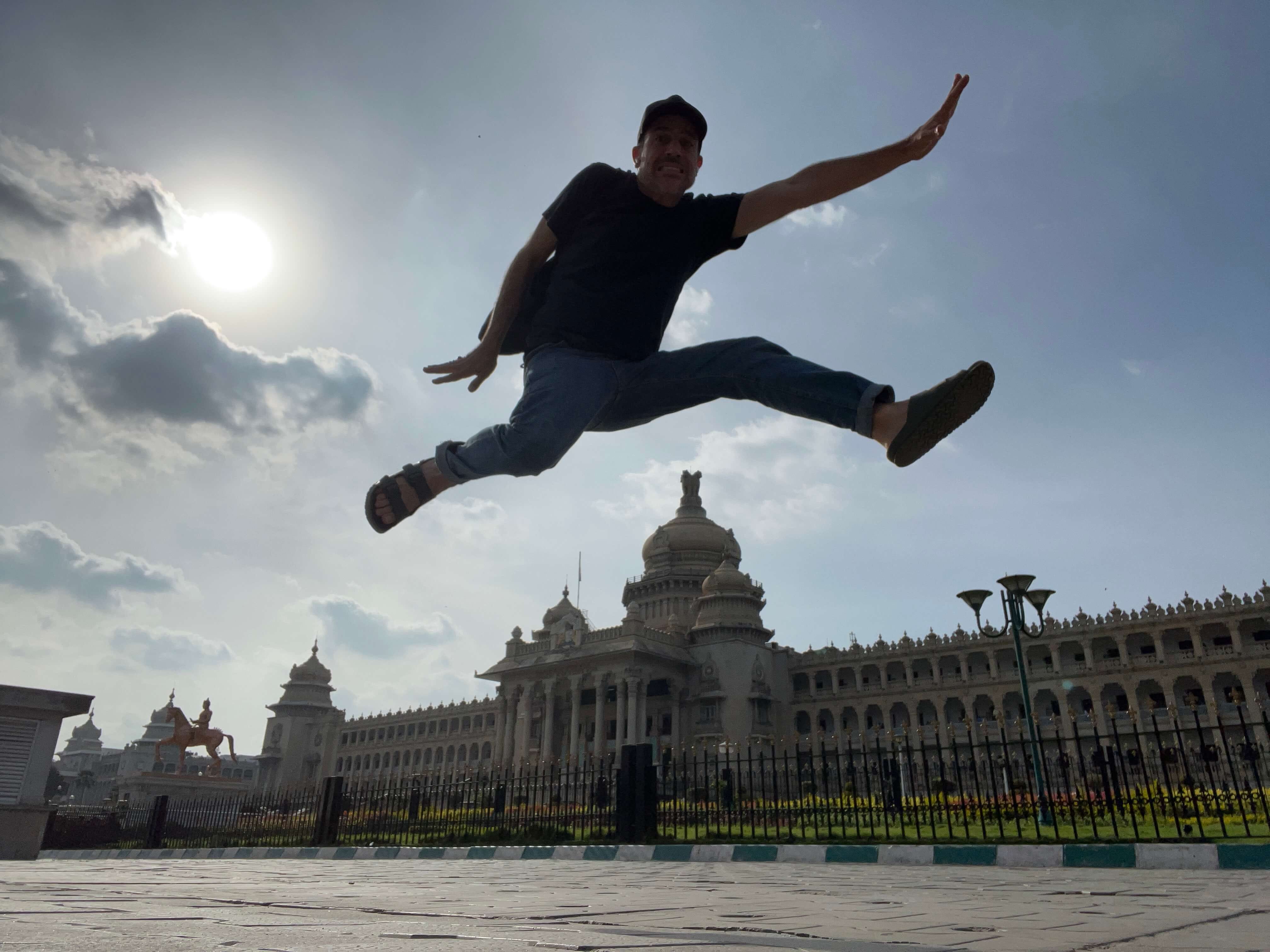
É preciso muita paciência para visitar a Índia. Paciência e desprendimento. O país-continente poderia ser outro planeta. Tudo é igual, mas diferente, e são essas diferenças que dão curto-circuito na cabeça. Hoje eu adoro. Venho para cá e mergulho nas ruas, na comida, nos templos, nos cheiros, nas feiras e nas massagens ayurvédicas. Mas demorou para a coisa deslanchar.
Na minha primeira visita, no auge do verão de 1997, de mochila e com orçamento de estudante, eu me sentia mais em missão de conhecer o Taj Mahal, Jaipur e a Grande Mesquita de Délhi do que em férias. Saía cedo da espelunca onde me hospedava, negociava com um riquixá que, antes de me levar para onde eu queria, fazia escala em várias lojas de souvenir. Visitava os monumentos, tirava fotos em meio à multidão que parecia querer um pedaço de mim. Voltava para o quarto fedido (eu igualmente fedido), derretido por dentro, para passar o resto do dia em posição fetal, com o ar-condicionado a todo vapor.
Trinta anos depois, muita coisa mudou. Hoje a Índia é uma das maiores economias do mundo. O país se abriu, e a globalização penetrou a fundo — para o bem e para o mal. Mas talvez a maior mudança tenha acontecido comigo. Aprendi a entender o país, a não aplicar os mesmos julgamentos nem esperar o mesmo conforto de Santiago ou Istambul.


Não deixo que meu fascínio por um lugar tão diferente se perca em detalhes práticos como filas intermináveis, um congestionamento absurdo ou a burocracia kafkiana que transforma o simples ato de atravessar um aeroporto indiano em provação. Se continuo vindo para cá sabendo como são as coisas, é justamente porque venho atrás disso. Hoje acho divertido o carro na contramão, a vaca no meio da avenida. Menos divertidos: o barulho ensurdecedor e a poluição assassina, mas também fazem parte do pacote.
Repito o país, mas não repito as cidades. Nesta viagem, visitei Amritsar, Hyderabad e Bangalore. Vem comigo.
Amritsar fica no Punjab, um estado dividido ao meio na partilha entre Índia e Paquistão, em 1947. É a terra sagrada dos sikhs, uma religião monoteísta fundada pelo Guru Nanak nesta Índia de milhares de deuses.
São conhecidos pelos turbantes (não cortam o cabelo nem a barba) e pelo Templo Dourado, um lugar magnífico onde fiquei horas apenas observando as pessoas. Purificado pelos sikhs, segui até a fronteira com o Paquistão, onde, a cada fim de tarde, na linha divisória entre os dois países, acontece uma cerimônia que mistura Sambódromo com Maracanã.
Duas arquibancadas, uma de frente para a outra, se enchem de cidadãos que gritam hinos nacionalistas e pulam de alegria com bandeiras, enquanto soldados desfilam e travam um duelo de danças, uma performance de galhardia bizarra. Tudo separado por uma enorme grade. E armas nucleares.
Torcendo para que tudo continue apenas uma grande performance, segui para Hyderabad, capital de Telangana, no que poderia ser a fronteira entre o norte e o sul da Índia. Queria descobrir o universo dos Nizams, sultões locais que promoveram as artes e as ciências e transformaram a região em uma das mais ricas e cultas do país.


Durante o período britânico, havia príncipes, nawabs, nizams e sultões que governavam seus domínios sob uma mera “supervisão” inglesa. Na independência, puderam escolher se fariam parte do Paquistão ou da Índia. Hyderabad era tão grande e tão rica que o nizam queria torná-la um estado independente — nem Índia, nem Paquistão. Mas as maquinações políticas não deixaram. Foram-se os nawabs, ficaram os monumentos e um pedaço fascinante da história que ligava Hyderabad a Istambul e a Meca.
Bangalore é a mais normal das grandes cidades indianas. Diria que é a Curitiba daqui. Verde, organizada, limpa, afluente, sede de milhares de multinacionais. É a capital mundial dos call centers e back offices.
Os indianos são inteligentíssimos principalmente em direito, contabilidade e tecnologia, falam inglês fluentemente, e o salário médio aqui é uma fração do de Houston ou Londres. Vieram para cá os departamentos de TI, contabilidade, compliance, finanças, atendimento ao cliente e inteligência artificial.
Como Curitiba, Bangalore não tem lá grandes atrações turísticas. Ainda assim, caminhei 15 quilômetros por dia cidade adentro. Devo ter enchido os pulmões de fuligem. Ainda bem que não fumo.
Escrevo com pressa, pois meu voo parte em breve. Novas paragens, novas descobertas, afinal, há mais coisas entre o Brasil e a Índia do que caberia numa única vida. Conto mais na próxima newsletter.
🇬🇧 Traveling to India demands patience — and a fair dose of surrender. The subcontinent could well be another planet. Everything feels familiar yet utterly different — and those differences are what make the mind short-circuit.
Today, I love it. I delve into the streets, the food, the temples, the scents, the markets, and the Ayurvedic massages. But it wasn’t always like this. It took time for things to click.
On my first visit, back in the searing summer of 1997, I was backpacking on a student budget. I felt less like a traveler on holiday and more like someone on a mission — to see the Taj Mahal, Jaipur, and Delhi’s Great Mosque. I’d leave early from the dingy guesthouse where I was staying, haggle with a rickshaw driver who, before taking me to my destination, insisted on stopping at every souvenir shop along the way. I’d see the monuments, snap photos amid a crowd that seemed to want a piece of me, and return to my grimy room, smelly, melting from the heat and collapsing for the rest of the day in fetal position, air conditioner blasting.
Thirty years later, much has changed. India is now one of the world’s largest economies. The country opened up, and globalization has sunk its teeth deep — for better or worse. But perhaps the biggest transformation has been in me.
I’ve learned to understand the country, to drop the same expectations and judgments I’d apply in Santiago or Istanbul. I no longer let my fascination with such an extraordinary place get clouded by practical nuisances — an endless queue, a monstrous traffic jam, or the Kafkaesque bureaucracy that can turn a simple airport transfer into a test of endurance.
If I keep coming back, it’s because I’ve learned to find joy in the very things that once drove me mad — a car going the wrong way, a cow blocking an avenue. The noise and the pollution are still maddening, sure, but they, too, are part of the deal.
I return to the country, but not to the same cities. This time, I visited Amritsar, Hyderabad, and Bangalore. Come along.
Amritsar lies in Punjab, a state split in two during the 1947 partition between India and Pakistan. It’s the sacred land of the Sikhs — a monotheistic religion founded by Guru Nanak in this India of countless gods.
They’re known for their turbans (they don’t cut their hair or beards) and for the Golden Temple, a breathtaking place where I spent hours simply watching people. Purified by the Sikhs, I made my way to the border with Pakistan, where every evening, on the very line dividing the two nations, a ceremony unfolds that feels like Carnival meets football.
Two grandstands face each other, filled with crowds waving flags, singing anthems, and leaping with patriotic energy, while soldiers perform a sort of dance battle — a spectacular, bizarre show of bravado. All separated by a giant gate. And nuclear weapons.
Hoping it all remains just a performance, I continued south to Hyderabad, the capital of Telangana — a city that sits somewhere between India’s north and south. I wanted to uncover the world of the Nizams, the local sultans who once fostered art and science and made the region one of India’s wealthiest and most sophisticated.
During British rule, there were princes, nawabs, nizams, and sultans who governed their own realms under nominal “supervision” from the Crown. When independence came, they could choose between joining Pakistan or India. Hyderabad was so vast and prosperous that its nizam wanted it to become an independent state — neither India nor Pakistan. But politics, of course, had other plans. The privy purse is gone, but the monuments remained — along with a fascinating chapter connecting Hyderabad to Istanbul and Mecca.
Bangalore, on the other hand, is the most “normal” of India’s major cities. Think of it as the Curitiba of India — green, organized, clean, affluent, and home to thousands of multinationals.


It’s the world capital of call centers and back offices. Indians are brilliant — especially in law, accounting, and technology — and their English is flawless. With local salaries being a fraction of what they are in Houston or London, the city became a magnet for departments of IT, finance, compliance, customer service, and AI.
Like Curitiba, Bangalore doesn’t have much in the way of landmarks, but I still managed to walk about 15 kilometers a day, exploring its streets. I probably filled my lungs with soot. Good thing I don’t smoke.
I’m writing this in a rush — my flight leaves soon. New places await, new stories to tell. After all, there are more things between Brazil and India than one could ever experience in a single lifetime. See you next month!
I love love your stories and the photos too. I was thinking about you today. I took the metro, tuk-tuk, went to the Jama Masjid, the largest mosque in India, in Old Delhi and did a food tasting walking tour. I was very proud of myself and I know you would have loved it. Come back to India and we’ll do this together.
Hi my dear, it is always amazing reading you. Don’t ever stop!
Sending you much love!