


For English, please scroll down to 🇬🇧
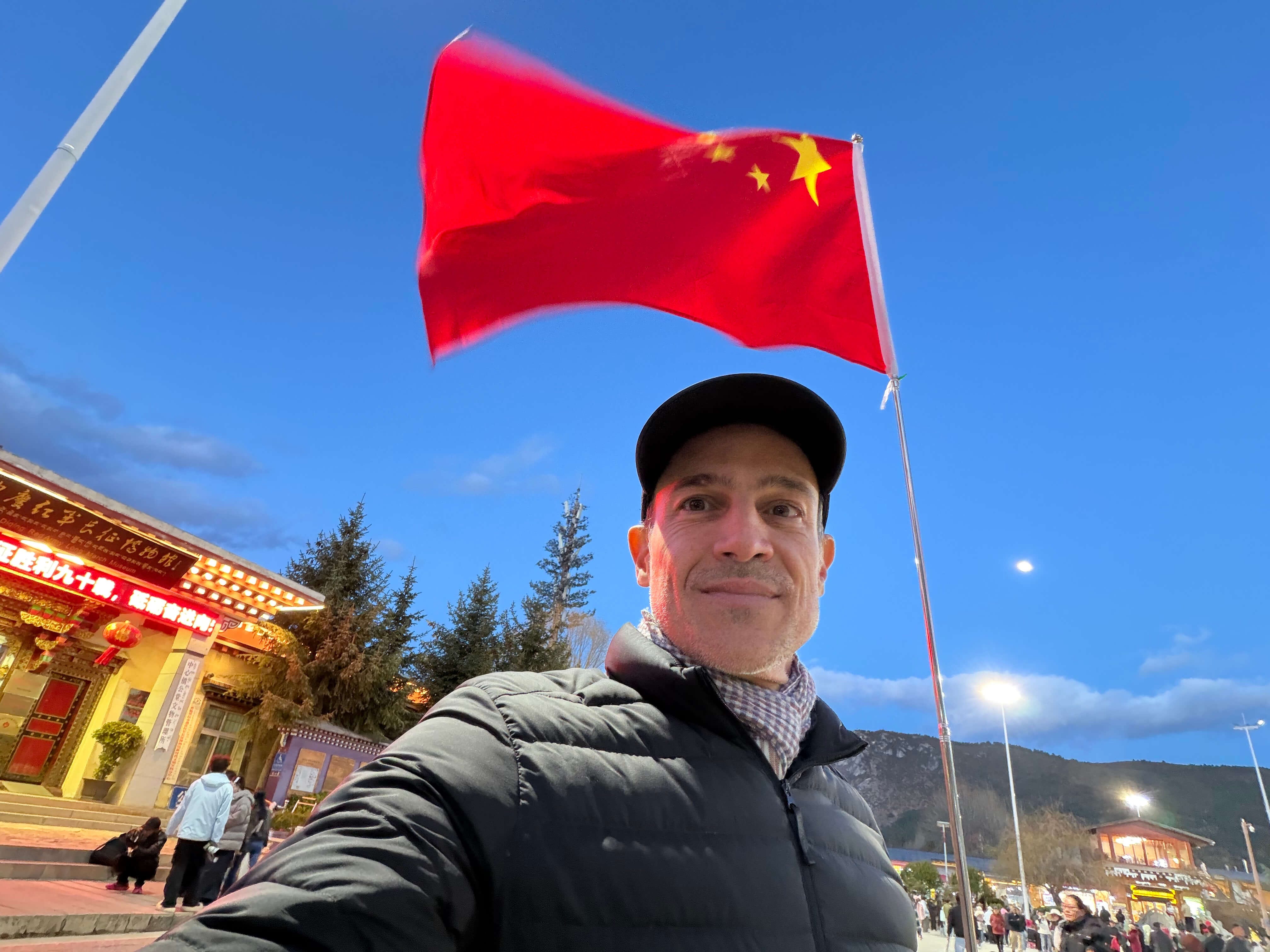
Fiquei tanto tempo sem escrever que me sinto como uma represa. É tanta coisa para contar que a barreira pode ceder e as novidades saírem em enxurrada, sem pé nem cabeça. Na verdade, fevereiro estava meio lamaçal. Passei em modo curitibano, dedicando energia a outros assuntos que já contei aqui, mas que não têm mais me motivado a escrever de forma criativa e divertida. Até mesmo o mandarim estava me sugando, como no dia da marmota, em que se começa do zero cada vez que acordo e abro o livro.
Nada melhor do que aviões, aeroportos e novos horizontes para fazer o desejo de contar histórias transbordar. Sabia que, assim que entrasse na China, o bichinho narrador que mora na minha cabeça voltaria a sussurrar. Hoje já se passaram 20 dias de China. O mandarim continua abaixo de zero, mas, pela primeira vez, entrei em um café e pedi um cappuccino usando todo o meu vocabulário e cara de pau. Saiu um café delicioso e um elogio da barista — que, claro, não entendi.
Ah, a China!
Voei de Bangkok para Guangzhou (Cantão) e, ao contrário de ser um voo em que eu era o único ocidental em meio a um mar de chineses, um conjunto cosmopolita de passageiros me fez companhia: árabes, africanos, europeus, indianos, asiáticos de vários países. Todos em busca do novo, do high-tech, da energia que move o planeta. Basta sair do avião para entrar em outra dimensão. Os aplicativos, o uso da tecnologia e da inteligência artificial, a organização e o tamanho dos terminais, estacionamentos, estações de trem… é tudo gigante! E tudo é feito a partir do celular, que funciona de forma diferente de como estamos acostumados. Três aplicativos dão conta de tudo: Amap no lugar do Google Maps, Trip.com para reservar tudo e Alipay para respirar, pagar, traduzir, chamar táxi, converter, pedir socorro. Só que, claro, a interface é chinesa, cheia de informações diminutas, coloridas, que mudam, pulam, brilham. Algumas se traduzem automaticamente, mas de forma estranhas, literais demais. Na maioria das vezes, é fechar os olhos e seguir em frente, torcendo para dar certo.
A China sofreu uma sublimação. Não foi de sólido para líquido, de líquido para gasoso. Deu um salto triplo, um bundalelê no Ocidente. Em 20 minutos após o avião pousar, eu já estava em um táxi trocando a passagem do trem-bala para uma estação mais próxima, em um trem mais conveniente para Guilin. Pense: em 20 minutos eu saí do avião, cadastrei minhas digitais e foto no Grande Sistema Chinês, passei pela imigração, coletei a mala, atravessei a alfândega e desci três lances de escadas rolantes até um lugar exclusivo para carros de aplicativo, que chegam exatamente na zona numerada onde a gente espera. Para trocar de trem, bastaram alguns toques. Eu quase não cabia em mim de tanta emoção e excitação.
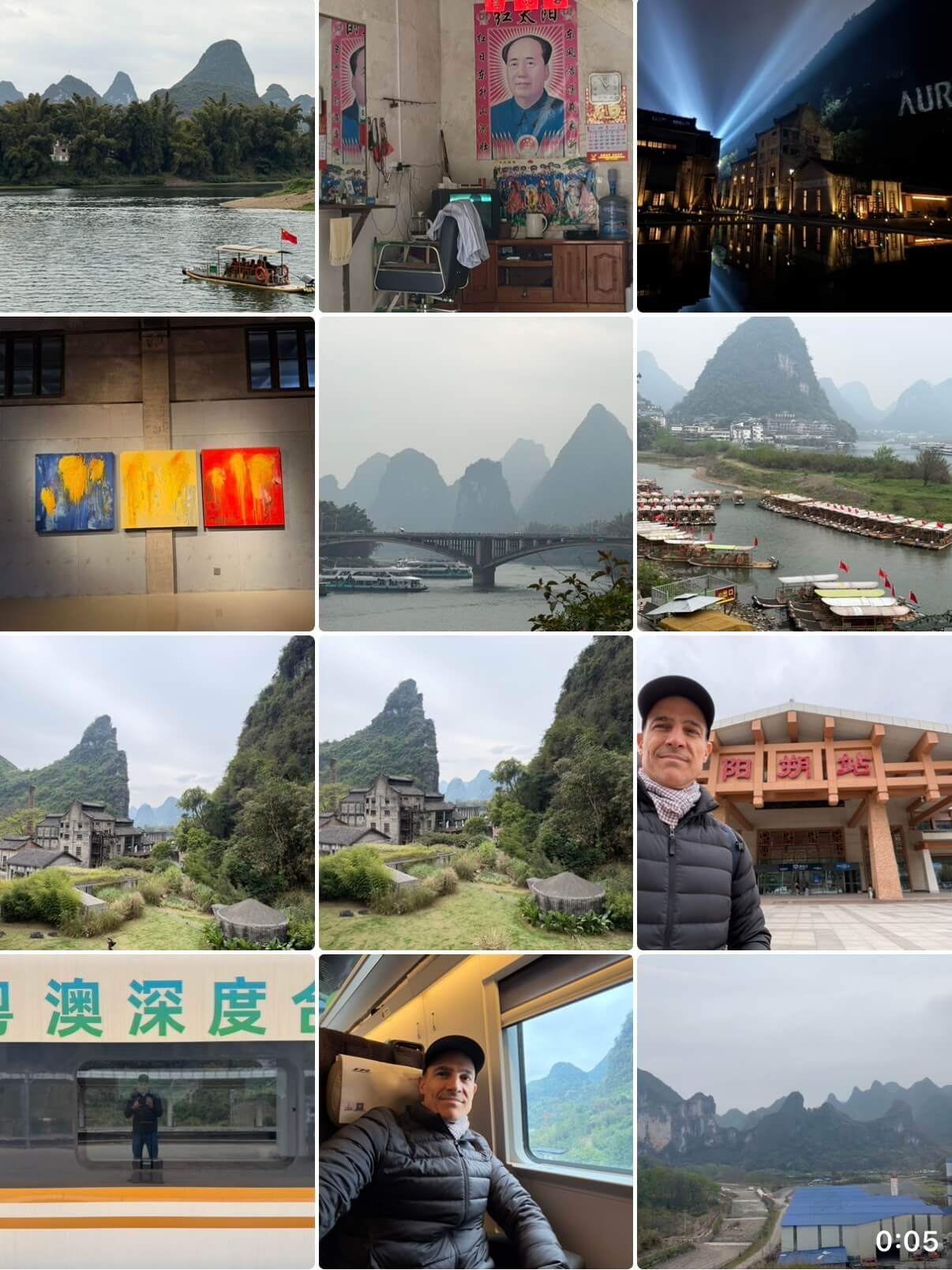
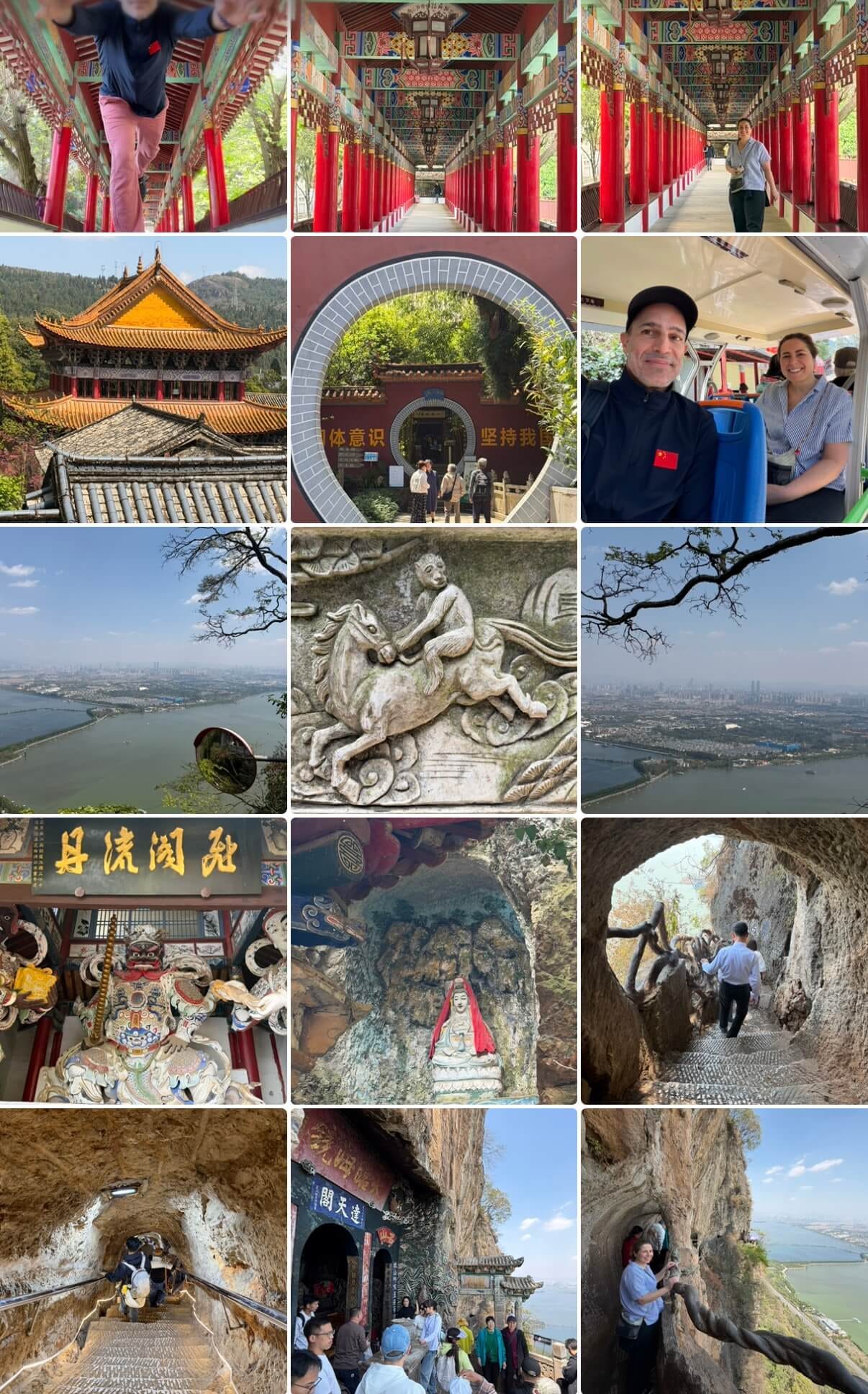
Cheguei a Guilin meio atordoado com tudo, inclusive com a velocidade do trem, o conforto do assento (isso sem viajar na classe business, com assentos que reclinam e viram cama) e a paisagem. Me belisque: estou vendo mesmo a China ali fora? As montanhas que aparecem em murais, pinturas e iconografia chinesas são uma das grandes atrações turísticas do país. De Guilin segui para Yangshuo, que é o centro nevrálgico do turismo local — o castelo da Cinderela da Disney dessa região.
Bem, o hiperturismo não é coisa só de Barcelona ou Mykonos. Na China, qualquer ponto de interesse se transforma numa muvuca. O que se esperar de um país de bilhões? Ainda bem que a infraestrutura acompanha: há aeroporto, trem, viaduto, hotel e restaurante para todos. Só que é um emaranhado de lojinhas de tranqueiras, redes de chás multicoloridos, estúdios de roupas típicas para sessões de fotos, McDonald’s, Starbucks, KFC no meio. É preciso filtrar a bagunça para apreciar a beleza.
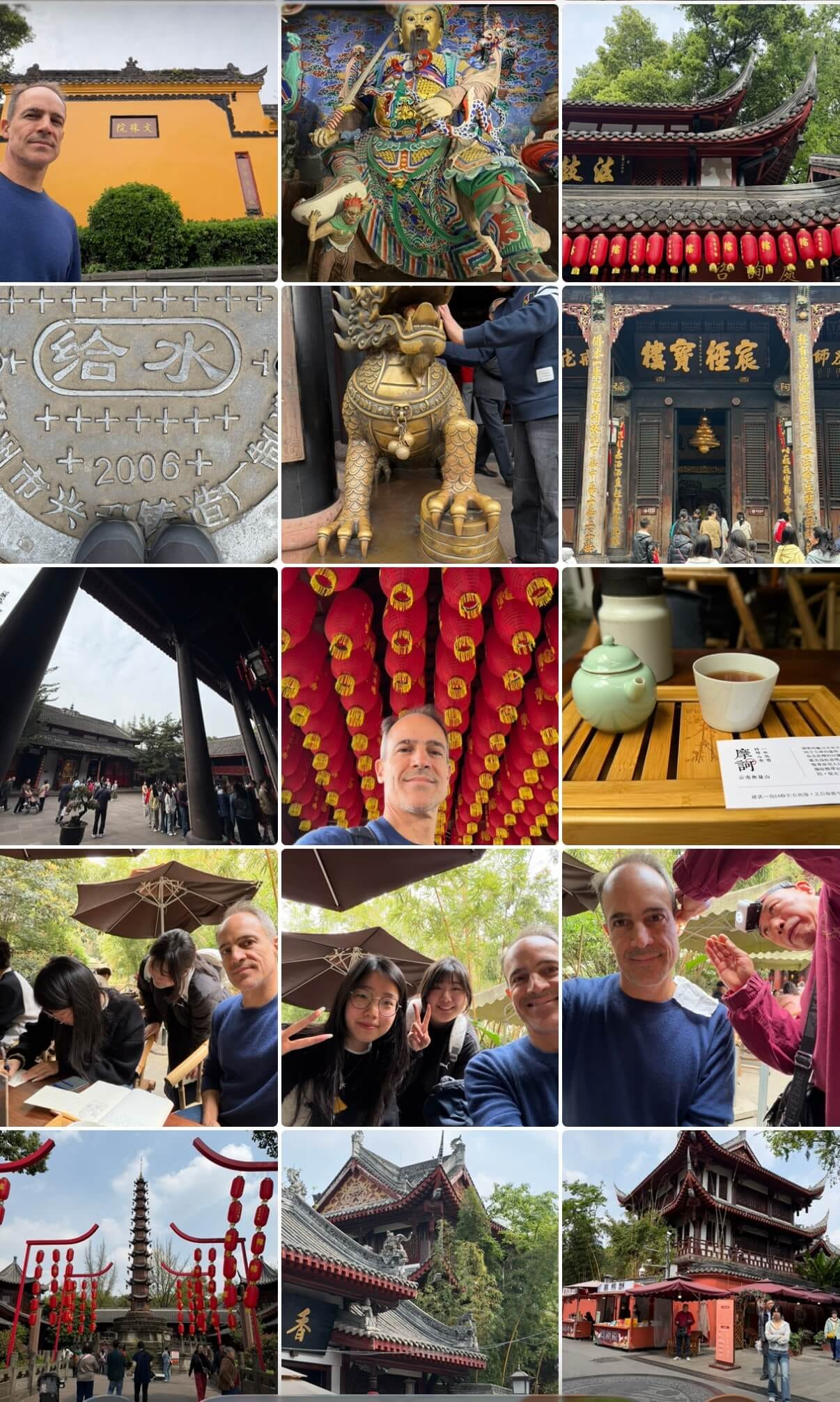
A próxima parada foi Chengdu, no meio da China. Terra de comida picante e ursos panda. Em menos de cinco horas, cruzei 1.500 quilômetros de plantações, painéis solares e cidades desconhecidas de dois a três milhões de habitantes. Não vi pandas, mas Chengdu me atraiu por ser a cidade dos inconformados chineses. Uma cidade grande, longe dos controles e censuras de Pequim e da busca desenfreada por sucesso e dinheiro de Xangai. Na verdade, a região de Sichuan incomoda o governo central por ser rica, pujante, cheia de gente inteligente. Tanto que separaram Chengdu (com 20 milhões de habitantes) de Chongqing (com 32) para ficar mais fácil de manejá-las. Juntas, eram capazes de tomar conta do resto do país. Quem nunca ouviu falar de Bo Xilai, concorrente de Xi Jinping, saiba que, por um triz, a China não teve um sichuanês no comando. Chengdu tem rap, literatura, poesia e teatro experimental. Bem, tinha — até o Big Brother apertar um pouco mais os parafusos da censura. Mesmo assim, é um lugar de gente legal. Dizem que o sotaque da cidade é inconfundível. Eu, claro, não notei.
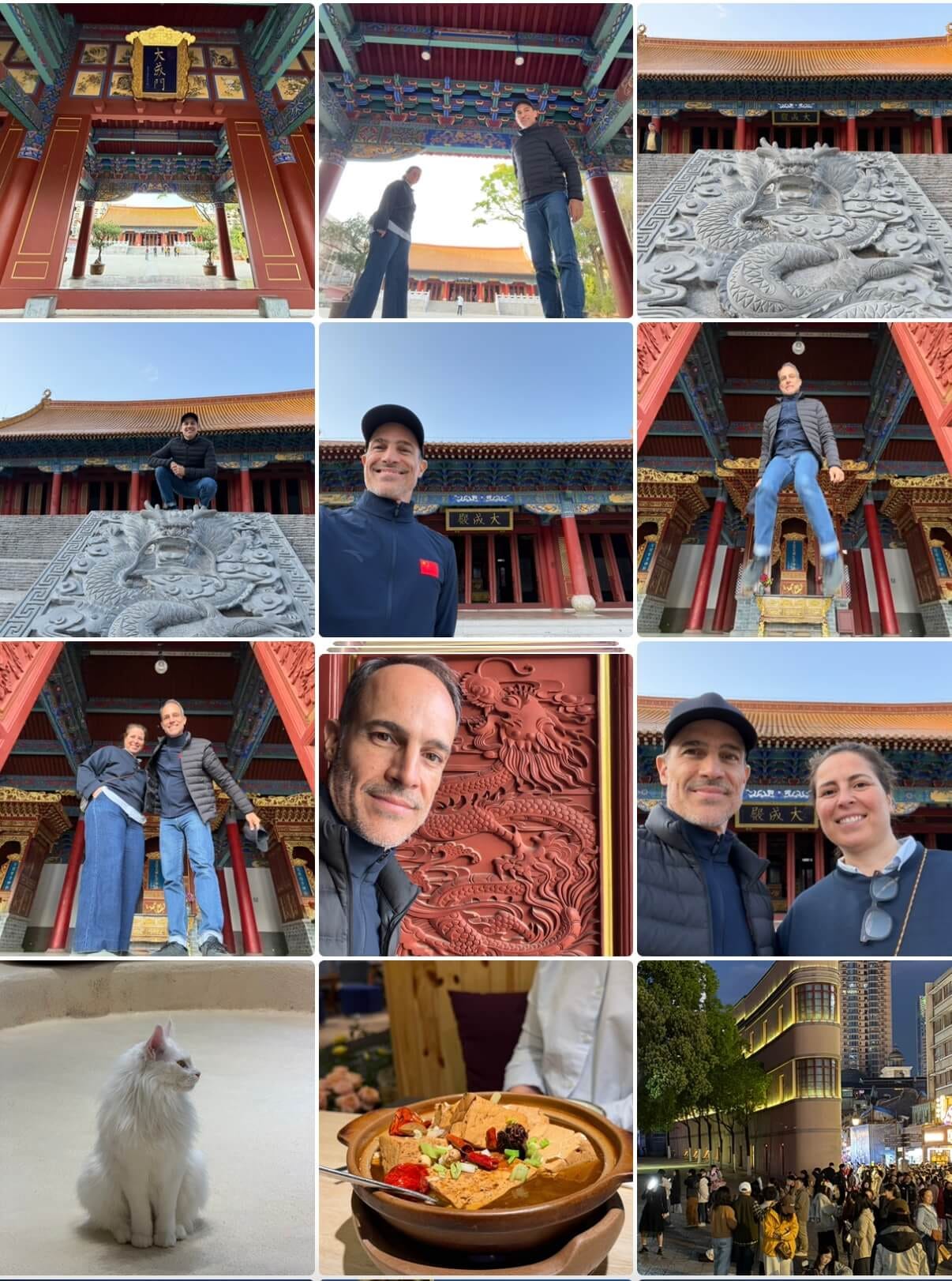
A apoteose da viagem foi a província de Yunnan, com mais uma jornada de trem-bala em direção ao sul, às fronteiras da China com o Sudeste Asiático e o Tibete. Yunnan é a Bahia da China, a província para onde todos sonham em viajar e relaxar. Kunming, a capital, que imaginei ser um lugar provinciano, é uma metrópole de 9 milhões. O que faz a diferença é a composição da população local. Cerca de 35% dos 50 milhões de yunanenses faz parte de uma das 25 minorias étnicas (a China toda tem 56 minorias). Os Yi, Bai, Hani, Dai, Miao, Naxi… gente que vive por ali há milênios. Poderíamos dizer que são os indígenas da China. É uma profusão de cores, comidas, estilos arquitetônicos, religiões e línguas que dá nó na cabeça. Cada um com sua loja de bubble tea.
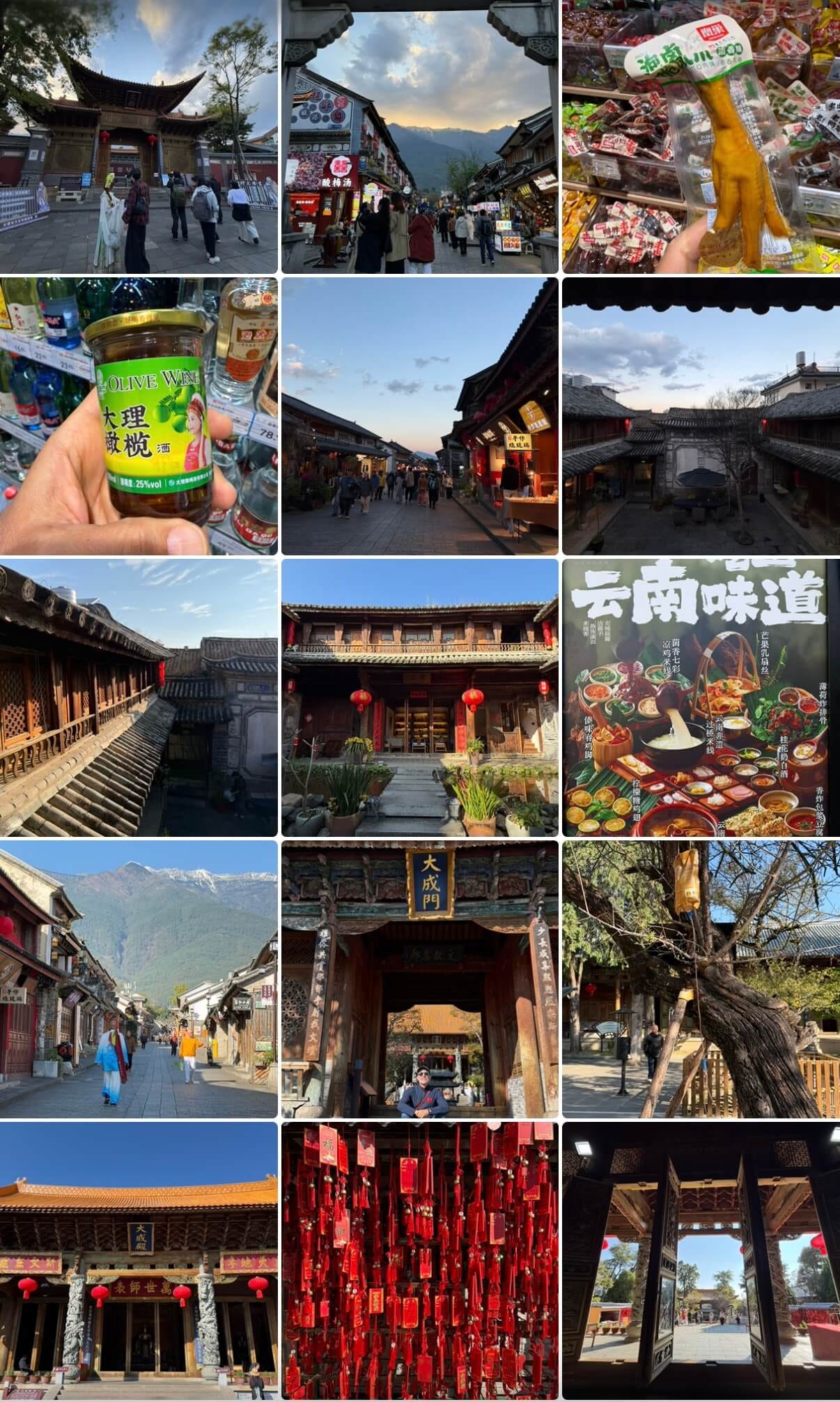
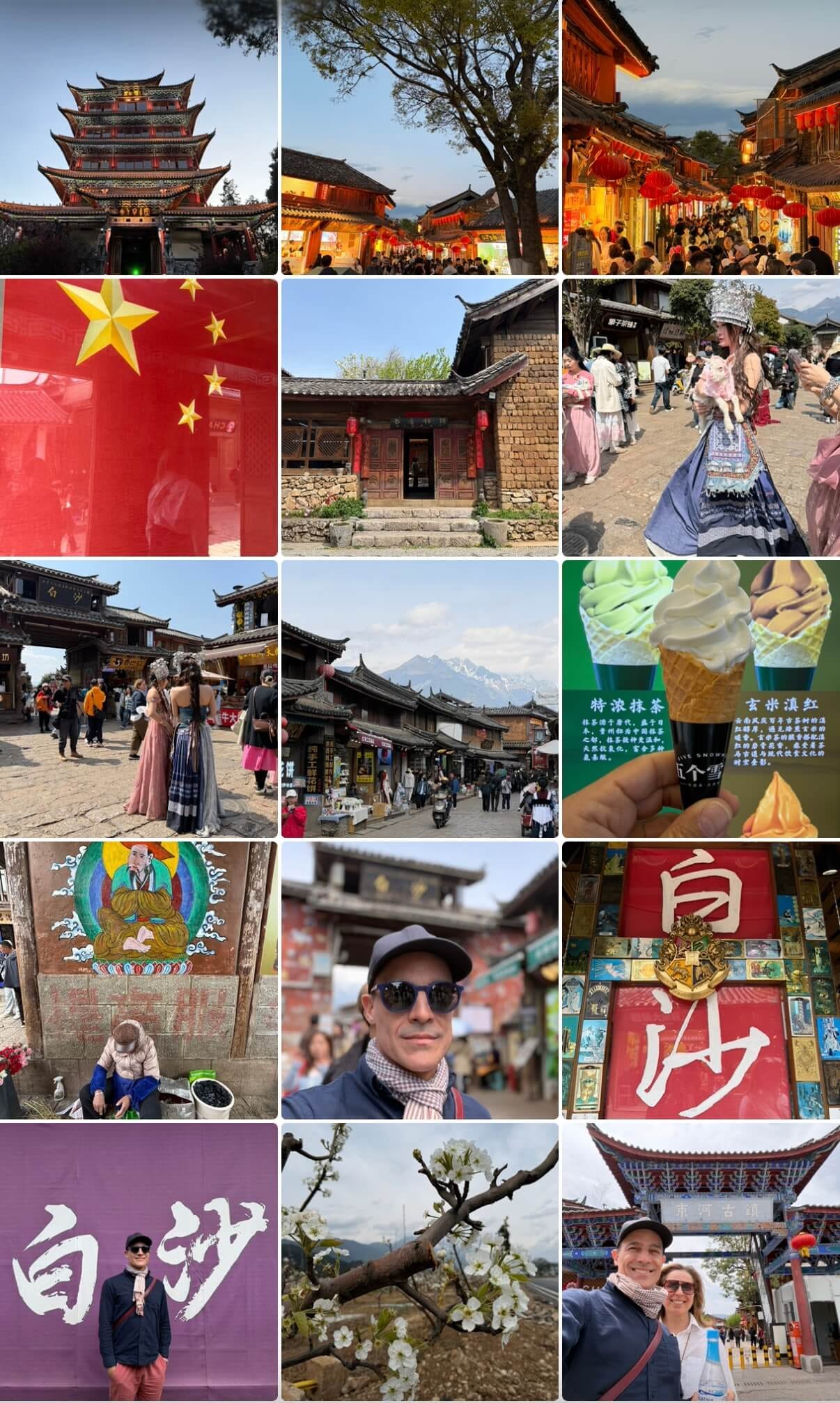
São três os destinos principais em Yunnan: Dali, Lijiang e Shangri-La. Dali fica à beira de um lago enorme e tem um clima relax. Jovens com violão e cabeleiras, cafés independentes. A cidade murada é bastante antiga e foi a capital de um reino que dominava o comércio da Rota da Seda do Sul, que entrava na China pela Birmânia, Laos e Tailândia. Um dos chás mais apreciados do mundo é cultivado ali, o Pu’er. Lijiang fica na porta de entrada do Tibete. É mais fotogênica, com uma enorme montanha de cinco mil metros de altitude, riachos e pontes de pedra. Tem hotéis melhores e mais atrações. Quase todo mundo no meu hotel estava ali para fazer hiking nas trilhas nevadas. Todos equipados com roupas e botas especiais, câmeras e drones. Nisso, os chineses se equiparam aos japoneses: adoram gadgets e se montam com afinco para curtir seus hobbies.
De Lijiang fui para Shangri-La, já no altiplano tibetano. Fiz de tudo para pegar um assento com janela no trem-bala, para poder apreciar as ravinas, picos nevados e vales com iaques. Mas o trem entrou em um túnel a dois minutos da partida e, quando saímos, uma hora depois, já estávamos chegando. A China é assim: túneis e pontes para encontrar o caminho mais rápido e eficiente. O que também me esperava do lado de lá do túnel era uma friaca braba, bem tibetana. Quase caiu minha orelha. O hotel também foi engraçado, pois tinha certeza de que ficaria em um estabelecimento da rede de luxo Shangri-La. Imaginava a sauna, a piscina, o spa. Só que todos os hotéis da cidade têm Shangri-La no nome. O meu era um lugar fofinho, limpinho, mas sem piscina, sauna, spa ou bufê de café da manhã e cardápio de travesseiros.
Shangri-La é sinônimo de paraíso, onde o homem e a natureza vivem em harmonia. Foi um antropólogo estrangeiro que sugeriu ali ser tal lugar, mítico e a ideia pegou. A China logo aproveitou o nome e registrou o lugar no mapa. Há um monastério lamaísta que é semelhante ao Potala de Lhasa, a capital do Tibete, e faz o tempo correr para trás cada vez que se cruzam as cortinas da fachada para penetrar no hall com incensários, flâmulas, mil estátuas douradas e monges recitando em transe. Até o sol apareceu nesse dia e transformou a paisagem num caleidoscópio multicolorido, contrastando o azul celeste com o amarelo dos templos. Foi de tirar o fôlego — até porque eu estava a quase 3.500 metros de altitude. Vários turistas carregavam garrafas de oxigênio compradas em lojas de conveniência.
Da chegada ao aeroporto de Guangzhou, passando por Guilin, Yangshuo, Chengdu, Kunming e as cidades históricas de Yunnan, eu pensava: se isto é o comunismo, eu quero para mim. A China é mais dinâmica, limpa, segura, barata e aberta do que lugares que se consideram o ápice da democracia e das liberdades individuais. A busca pelo bem-estar coletivo — com o plantio de árvores para diminuir a poluição, a eletrificação dos transportes, praças, escolas, transporte público hipercapilarizado, túneis, pontes, trens, comida (nunca vi tanta fruta e comida de rua na vida) — é de dar inveja.
O papel cada vez mais central da China no mundo não é nada acidental. Não quero também passar pano para as centenas de coisas ruins que existem na China e para o que o país faz com certos outros. Mas vejo um modelo muito mais centrado e equilibrado para liderar o discurso global. Fora que 25% do mundo é chinês — ou seja, eles têm volume suficiente para elaborar as regras do presente.
Gostaria de seguir contando sobre impressões, anedotas e experiências. Foram 20 dias intensos de aprendizado. O mandarim segue básico. Tento ao menos ser simpático, repetindo xie xie (obrigado), ni hao (olá) e hen hao (muito bom) o tempo todo, usando indiscriminadamente um ou outro. Ah, se achava que as pessoas ficavam muito coladas no celular no Brasil, agora que vi como é na China, acho os brasileiros até comedidos. Se bem que o respeito ao espaço público é muito maior na China. Ninguém fica vendo redes sociais em alto volume, nem escutando mensagens pessoais de voz no WhatsApp junto com todo mundo ao redor. Sim, tem a tia que fala gritando com alguém, as pessoas que dirigem motinhos elétricas silenciosas pelas calçadas e quase passam por cima dos pedestres. Fazer fila é um conceito bem relativo, bem como o que se serve em um restaurante dito vegetariano. Talvez, na China, as galinhas estejam na categoria legumes, junto com as tartarugas.
Vou parar por aqui, pois cheguei a Taiwan, a ilha tão cobiçada pelo governo chinês. Foi como voltar a habitar o mesmo ecossistema ao qual estamos acostumados, com Google, cartões de crédito e mais gente que fala inglês. As aulas de mandarim começam em breve, diariamente, das 9h às 16h. Acho que exagerei na dose, mas te conto em breve — em português ou, quem sabe, já em mandarim.
Se quiser saber mais sobre a China, recomendo os seguintes livros:
-Laowai, de Sonia Bridi
-Henfil na China antes da Coca-Cola, do Henfil (acho que só vai ter em sebos)
-Faço entregas em Pequim, memórias de um trabalhador, de Hu Anyan
-Cisnes selvagens, de Jun Chang
-Breakneck, de Dan Wang (em inglês)
-China in ten words, de Yu Hua (em inglês)
-Viajando de trem através da China, de Paul Theroux (também em sebos)
-Era da ambição, de Evan Osnos
-newsletter Elephant Room no Substack (em inglês, mas fácil de trazudir com DeepSeek)
🇬🇧 I went so long without writing that I feel like a dam. There’s so much to tell that the barrier could give way and everything might come rushing out in a flood, with neither structure nor sense. In truth, February was a bit of a swamp. I stayed in “Curitiba mode,” putting energy into other matters I’ve already mentioned here, but that no longer motivate me to write in a creative and fun way. Even Mandarin was draining me—like in Groundhog Day, where you start from zero every time you wake up and open the book.
Nothing beats planes, airports, and new horizons to make the desire to tell stories overflow. I knew that, as soon as I entered China, the little storyteller living in my head would start whispering again. It’s now been 20 days in China. My Mandarin is still below zero, but for the first time I walked into a café and ordered a cappuccino using my entire vocabulary—and sheer boldness. Out came a delicious coffee and a compliment from the barista—which, of course, I didn’t understand.
Ah, China!
I flew from Bangkok to Guangzhou (Canton), and instead of being the only Westerner in a sea of Chinese passengers, I found myself among a cosmopolitan mix: Arabs, Africans, Europeans, Indians, Asians from various countries. All searching for something new, for high-tech, for the energy that drives the planet. The moment you step off the plane, you enter another dimension. The apps, the use of technology and artificial intelligence, the organization and sheer scale of terminals, parking lots, train stations… everything is gigantic! And everything runs through your phone, but in a way completely different from what we’re used to. Three apps handle it all: Amap instead of Google Maps, Trip.com to book everything, and Alipay for breathing—paying, translating, calling a taxi, converting currencies, asking for help. But of course, the interface is in Chinese, full of tiny, colorful bits of information that move, jump, and flash. Some things translate automatically, but in strange, overly literal ways. Most of the time, it’s about closing your eyes and moving forward, hoping it works.
China has undergone a kind of sublimation. Not from solid to liquid or liquid to gas—it made a triple leap, a full-on flip over the West. Within 20 minutes of landing, I was already in a taxi, changing my high-speed train ticket to a closer station, onto a more convenient train to Guilin. Think about it: in 20 minutes I got off the plane, registered my fingerprints and photo in the Great Chinese System, went through immigration, picked up my luggage, crossed customs, and went down three escalators to a designated ride-hailing area, where cars arrive exactly at the numbered zone where you’re waiting. Changing trains took just a few taps. I could barely contain myself with excitement.
I arrived in Guilin a bit dazed by everything—the speed of the train, the comfort of the seat (even without traveling business class, where seats recline into beds), and the scenery. Pinch me: am I really seeing China out there? The mountains that appear in murals, paintings, and Chinese iconography are one of the country’s great tourist attractions. From Guilin I went to Yangshuo, the nerve center of local tourism— Disney’s Cinderella castle of the region.
Well, overtourism isn’t just a thing in Barcelona or Mykonos. In China, any point of interest turns into an invading mob. What else would you expect from a country of billions? Luckily, the infrastructure keeps up: there are airports, trains, overpasses, hotels, and restaurants for everyone. But it also comes with a tangle of trinket shops, colorful bubble tea chains, costume studios for photoshoots, McDonald’s, Starbucks, KFC right in the middle. You have to filter out the chaos to appreciate the beauty.
Next stop: Chengdu, in central China. Land of spicy food and pandas. In less than five hours, I crossed 1,500 kilometers of farmland, solar panels, and unknown cities of two to three million inhabitants. I didn’t see pandas, but Chengdu drew me in as the city of China’s nonconformists. A large city, far from the controls and censorship of Beijing and from Shanghai’s relentless pursuit of success and money. In fact, the Sichuan region bothers the central government for being wealthy, vibrant, and full of intelligent people. So much so that Chengdu (20 million inhabitants) was separated from Chongqing (32 million) to make them easier to manage. Together, they could have dominated the rest of the country. If you’ve never heard of Bo Xilai, a rival of Xi Jinping, know that China almost had a Sichuanese leader. Chengdu has rap, literature, poetry, and experimental theater—or at least it did, until Big Brother tightened the screws of censorship. Still, it’s a place full of cool people. They say the local accent is unmistakable. I, of course, couldn’t tell.
The apotheosis of the trip was Yunnan province, with yet another high-speed train journey south, toward China’s borders with Southeast Asia and Tibet. Kunming, the capital, which I imagined as provincial, is actually a metropolis of 9 million. What makes it different is the makeup of its population. About 35% of Yunnan’s 50 million inhabitants belong to one of 25 ethnic minorities (China as a whole has 56). The Yi, Bai, Hani, Dai, Miao, Naxi… people who have lived there for millennia. You could say they are China’s indigenous peoples. It’s a profusion of colors, foods, architectural styles, religions, and languages that makes your head spin. Each with their own bubble tea shop.
There are three main destinations in Yunnan: Dali, Lijiang, and Shangri-La. Dali sits by a huge lake and has a relaxed vibe—young people with guitars and long hair, independent cafés. The walled city is quite old and was once the capital of a kingdom that dominated trade along the Southern Silk Road, which entered China through Burma, Laos, and Thailand. One of the world’s most prized teas is grown there: Pu’er. Lijiang is at the gateway to Tibet. It’s more photogenic, with a massive 5,000-meter mountain, streams, and stone bridges. It has better hotels and more attractions. Almost everyone at my hotel was there for hiking on snowy trails—fully equipped with special clothing, boots, cameras, and drones. In that sense, the Chinese are like the Japanese: they love gadgets and fully gear up to enjoy their hobbies.
From Lijiang I went to Shangri-La, already on the Tibetan plateau. I did everything I could to get a window seat on the high-speed train to admire ravines, snow-capped peaks, and valleys with yaks. But the train entered a tunnel two minutes after departure, and when we came out of it an hour later, we were already arriving. China is like that: tunnels and bridges to find the fastest, most efficient route. Waiting for me on the other side was intense cold—very Tibetan. My ears almost froze off. The hotel was also funny, because I was sure I had booked a luxury Shangri-La hotel, imagining a sauna, a pool, a spa. But every hotel in the city has “Shangri-La” in its name. Mine was cute and clean—but no pool, sauna, spa, breakfast buffet, or pillow menu.
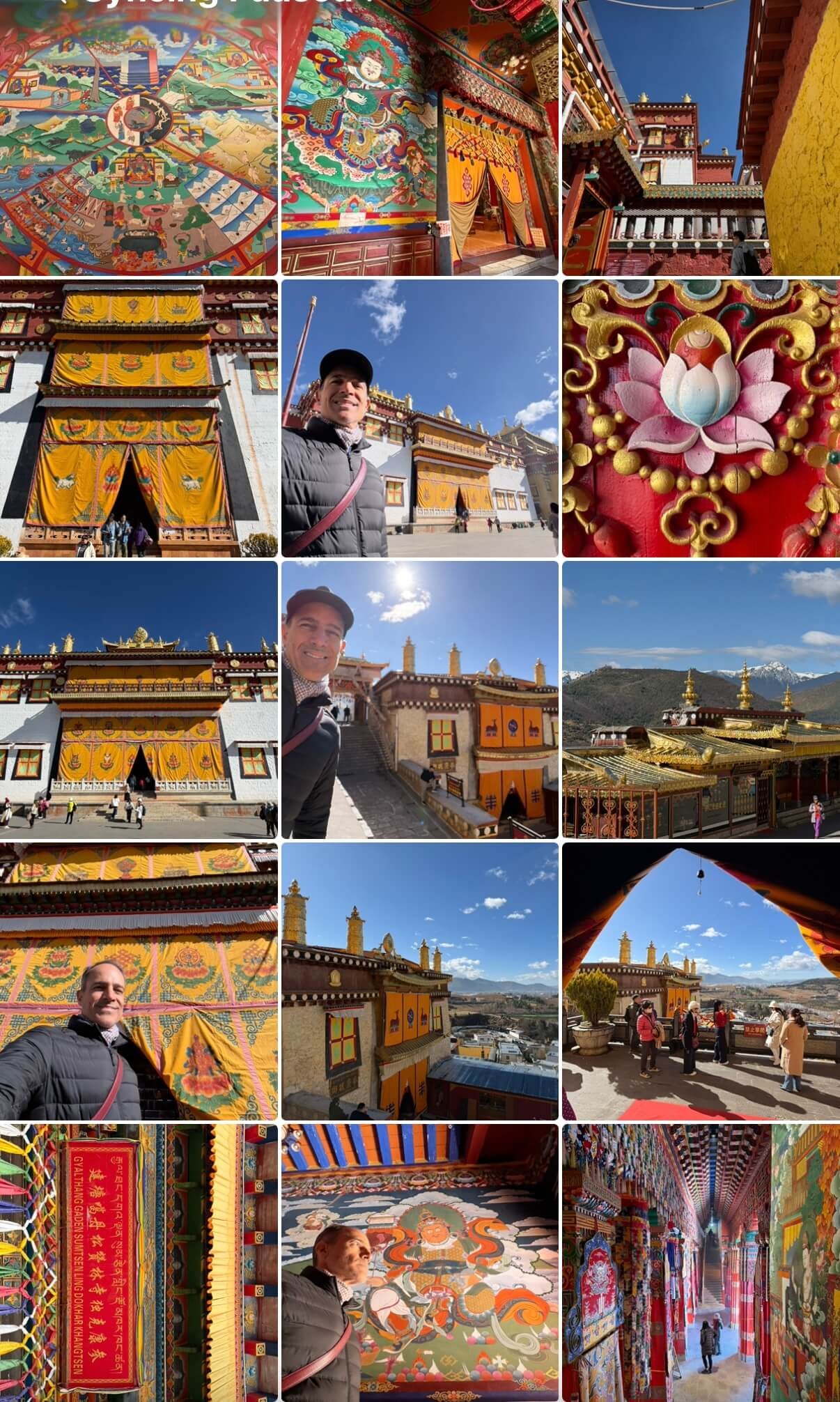
Shangri-La is synonymous with paradise, where humans and nature live in harmony. It was a foreign anthropologist who suggested that this mythical place was there—and the idea caught on. China quickly adopted the name and put it on the map. There’s a lamaist monastery resembling the Potala Palace in Lhasa, Tibet’s capital, where time seems to run backward as you cross the curtains and enter halls filled with incense burners, banners, a thousand golden statues, and monks chanting in a trance. Even the sun came out that day, turning the landscape into a multicolored kaleidoscope, contrasting the sky-blue with the yellow of the temples. It was breathtaking—also because I was at nearly 3,500 meters altitude. Many tourists carried oxygen canisters bought at convenience stores.
From arriving at Guangzhou airport, passing through Guilin, Yangshuo, Chengdu, Kunming, and the historic towns of Yunnan, I kept thinking: if this is communism, I want it for myself. China is more dynamic, cleaner, safer, cheaper, and more open than places that consider themselves the pinnacle of democracy and individual freedoms. The pursuit of collective well-being—with tree planting to reduce pollution, electrified transport, public squares, schools, highly connected public transit, tunnels, bridges, trains, food (I’ve never seen so much fruit and street food in my life)—is enviable.
China’s increasingly central role in the world is no accident. I don’t want to gloss over the many negative aspects of the country or what it does to others. But I do see a more centered and balanced model for leading the global discourse. And after all, 25% of the world is Chinese— they have enough scale to shape the rules of the present.
I’d like to keep sharing impressions, anecdotes, and experiences. These have been 20 intense days of learning. My Mandarin is still basic. I try at least to be friendly, repeating xie xie (thank you), ni hao (hello), and hen hao (very good) all the time, using them interchangeably. And if I thought people in Brazil were glued to their phones, now that I’ve seen China, Brazilians seem restrained. That said, respect for public space is much greater in China. No one blasts social media videos or listens to voice messages out loud on WhatsApp around others. Sure, there’s the aunt shouting on the phone, people riding silent electric scooters on sidewalks and nearly running over pedestrians. Queuing is a somewhat flexible concept, as is what’s served in a “vegetarian” restaurant. Maybe in China, chickens are classified as vegetables—along with turtles.
I’ll stop here, as I’ve arrived in Taiwan, the island so coveted by the Chinese government. It felt like returning to a familiar ecosystem, with Google, credit cards, and more people who speak English. Mandarin classes start soon, daily from 9 a.m. to 4 p.m. I may have overdone it—but I’ll tell you soon, in English or, who knows, maybe already in Mandarin.
demais Vince. obrigada por compartilhar seus relatos e essas incríveis fotos :)
Maravilha Vicente!!!
Aproveita muito sua viagem .
É muito bom viajar com voce na sua história.
Abração